
For a growing small business, physical expansion is one of the clearest indicators of success. Acquiring a larger warehouse, taking over a multi-tenant office suite, or fitting out a specialized manufacturing location marks a major operational milestone. However, physical growth brings a significant increase in operational risk. As square footage expands and daily workflows become more complex, facility maintenance shifts from an occasional administrative chore to a core business strategy.
Unplanned building downtime, emergency structural repairs, or neglected utility systems can rapidly drain working capital and derail tight client timelines. Too many expanding companies fall into the trap of reactive management—treating physical assets as static overhead until something breaks. Modern facility management views commercial property as an active engine of business performance. Protecting that engine requires a structured approach to asset preservation, energy optimization, safety compliance, and exterior presentation.
By taking control of physical infrastructure early in your expansion phase, you protect long-term property values, maintain safe conditions for employees, and ensure daily operations run smoothly. This detailed guide breaks down essential commercial building maintenance strategies into actionable operational areas.
1. Establishing a Proactive Maintenance Baseline & Asset Register
The foundation of effective facility management lies in the strategic shift from dealing with unexpected repair issues as they arise, towards implementing a solid schedule of Planned Preventive Maintenance (PPM). This shift from a reactive approach to a proactive one is crucial because a reactive method often entails paying costly emergency labor fees, experiencing prolonged operational downtime, and facing potential additional property damage. By adopting a preventive approach, facility managers gain significant control over maintenance schedules, associated vendor costs, and inventory cycles, effectively optimizing the management of their facilities.
To create an actionable and comprehensive maintenance framework, it is crucial to start with a thorough and detailed audit of all physical assets and essential building systems. This involves mapping out every component, mechanical, structural, or electrical. It’s important to note each asset’s age, warranty terms, maintenance history, and expected service life to develop a robust schedule that anticipates and minimizes potential issues before they become costly problems.
- Catalog All Mechanical Systems: Keep a detailed log of serial numbers, installation dates, and manufacturer specifications for critical systems such as heating units, air handlers, exhaust fans, pumps, and any specialized industrial machinery. This catalog serves as a valuable resource for assessing planned maintenance needs and for troubleshooting unexpected issues rapidly and effectively.
- Establish Service Intervals: Define and allocate clear maintenance tasks on a weekly, monthly, quarterly, and annual basis, instructing either internal facility staff or external service partners. By setting these service intervals, facilities ensure reliable operations and extended equipment lifespan, lowering overall costs and the frequency of emergency repairs.
- Document Custom Components: Maintain detailed technical files for any unique physical assets, including but not limited to structural frameworks, heavy equipment mounts, and customized processing hardware. This documentation aids in the swift sourcing and recreation of parts should they require replacement, preventing prolonged downtime and enhancing the resilience of operations.
In industries such as manufacturing, standard off-the-shelf repair components might not always be available when specialized machinery breaks down. For instance, if custom machinery support frames, conveyor tracks, or uniquely fabricated structural fittings wear out, turning to original equipment manufacturers for replacements might result in extended delivery waits, creating a risk of production stalls. Forming early collaborations with a precision metal parts manufacturing company allows for the production of custom replacement brackets, robust plates, and specialized mechanical hardware on demand, ensuring the continuity and efficiency of crucial production lines.
Additionally, facilities operating in climate-specific regions should account for seasonal variations, particularly when fuel is concerned, in their foundational operating schedules. If primary or backup heating systems depend on stored liquid fuel reserves, neglecting to monitor these levels could expose the building to severe freeze damage during extreme cold snaps. By arranging for regular scheduled deliveries of heating oil, facilities can ensure that boilers, hot water loops, and heavy unit heaters remain operational throughout winter conditions, thereby protecting delicate internal plumbing and maintaining comfortable indoor work environments.
2. Protecting Your Building Envelope & Structural Integrity
A building’s envelope—comprising its roofing system, exterior walls, windows, and foundation—serves as its primary barrier against environmental degradation. Minor envelope defects can quickly evolve into major structural issues, leading to interior water intrusion, structural wood rot, mold growth, and compromised concrete framing.
Routine building envelope audits should be conducted twice a year, ideally in spring and autumn, with additional spot checks following severe storms. Inspections must focus on joints, flashing points, masonry tuckpointing, and structural movement cracks.
- Inspect Thermal Seals: Check all exterior window framing, expansion joints, and caulking lines for cracking, shrinkage, or weather degradation.
- Verify Drainage Pathways: Ensure scuppers, downspouts, and site drainage paths remain free of debris, leaf buildup, and silt accumulation.
- Assess Masonry Integrity: Audit brickwork and concrete tilt-up panels for efflorescence, spalling, or moisture saturation marks.
Roofing systems require specialized, structured oversight because they sustain constant exposure to weather extremes, UV radiation, and heavy thermal expansion cycles. Conducting bi-annual moisture scans and physical roof walk-throughs helps identify minor membrane blisters, loose flashing, or deteriorated sealants before water penetrates internal ceiling cavities. Partnering with certified commercial roofing contractors allows business owners to manage life-cycle repairs, schedule preventative membrane coatings, and execute timely repairs that keep structural warranties intact.
Low-slope and flat roof structures bring unique challenges, particularly regarding drainage and weight distribution. Water ponding—defined as water that remains on a roof surface for more than 48 hours after precipitation—accelerates membrane breakdown, degrades underlying insulation, and adds thousands of pounds of unnecessary structural load. Managing facilities equipped with commercial flat roofing demands targeted upkeep of internal drain sumps, seam welds, pitch pockets, and parapet wall flashings to prevent sudden structural leaks above valuable inventory or delicate computing hardware.
3. Modifying Concrete Infrastructure for Expanding Workflows

As a small business grows, its floor plans rarely stay static. Scaling up operations often requires shifting layout designs, adding new industrial equipment, rerouting electrical connections, or installing heavy-duty plumbing lines. Commercial floor slabs must be actively managed to support changing operational demands.
Before introducing heavy machinery, high-density racking, or fork truck traffic to a commercial space, you must verify slab load capacities, joint integrity, and surface levelness. Unmanaged floor cracks under dynamic loads will spall and break down, creating safety hazards and damaging transport vehicles.
- Audit Expansion Joints: Check slab expansion joints for joint-filler separation, edge spalling, or differential settlement.
- Evaluate Surface Sealants: Apply high-durability epoxy coatings or penetrating silane-siloxane sealers to protect bare concrete from oil saturation, chemical spills, and heavy tire wear.
- Map Sub-Slab Utilities: Utilize ground-penetrating radar (GPR) to scan concrete slabs for embedded tension cables, rebar matrices, or utility conduits before executing any structural modifications.
When layout changes require running new plumbing lines, high-voltage electrical conduits, or sunken equipment footings, precise modifications are essential to avoid structural cracking or slab failure. Employing professional diamond-blade concrete cutting techniques allows technicians to open precise trenches, cut utility access channels, and sink anchor points cleanly without sending destructive micro-fractures through the surrounding slab structure. This controlled approach preserves the overall load-bearing capacity of your floor space while accommodating dynamic workflow redesigns.
4. Ensuring Seamless Perimeter Security & Access Control
Securing the physical boundary of your property protects valuable physical assets, intellectual property, inventory stocks, and staff members. As business operations expand to handle higher inventory volumes and round-the-clock shifts, perimeter access points must remain secure yet efficient for daily traffic.
A complete perimeter security strategy integrates physical barriers, clear lighting, electronic monitoring, and physical entry control hardware into a single, cohesive system.
- Audit Exterior Lighting: Ensure loading docks, storage yards, parking areas, and walkway paths are well-lit with energy-efficient LED fixtures.
- Upgrade Access Hardware: Implement electronic keycard systems, biometric readers, or scheduled timed access locks to track employee entry and limit unauthorized access to sensitive areas.
- Maintain Clear Sightlines: Trim vegetation away from perimeter boundaries, storage yards, and security camera zones to remove blind spots.
Establishing clear physical boundaries is the first line of defense against unauthorized entry, illegal dumping, and property damage. Working alongside experienced commercial fence contractors allows business owners to install heavy-duty chain-link, ornamental steel, or anti-climb fencing solutions fitted with automated sliding access gates. Regular maintenance of these perimeter systems—including lubricating gate rollers, aligning safety sensors, and repairing physical chain links—ensures uninterrupted site access for legitimate deliveries while keeping unauthorized vehicles out.
Building access control also relies heavily on the performance of high-traffic doors, loading dock bays, and emergency exit portals. High-use commercial entry points endure thousands of open-and-close cycles monthly, leading to worn roller bearings, misaligned tracks, and failing hydraulic closers. Scheduling routine maintenance with a qualified commercial door repair specialist prevents sudden dock lockouts, restores thermal efficiency along loading bays, and guarantees that emergency egress doors operate safely and meet local fire codes.
5. Optimizing Indoor Air Quality & Energy Efficiency
Indoor environmental quality directly impacts employee health, focus, operational efficiency, and monthly energy expenditures. Large commercial spaces with poor airflow management suffer from uneven temperature control, high humidity levels, and excessive particulate buildup, which strains heating and cooling equipment.
Optimizing indoor air systems requires balancing mechanical HVAC filtration, environmental controls, air exchange rates, and ductwork integrity.
- Establish Filter Replacement Schedules: Replace high-efficiency pleated filters every 30 to 90 days, shortening intervals during high-pollen seasons or heavy industrial production periods.
- Calibrate Thermostats & Controls: Implement programmable or smart building thermostats to manage setback temperatures during non-business hours and weekends.
- Inspect Air Dampers & Motors: Regularly check supply and return fan belts, lubricate blower bearings, and test air damper actuators to ensure proper airflow distribution across all building zones.
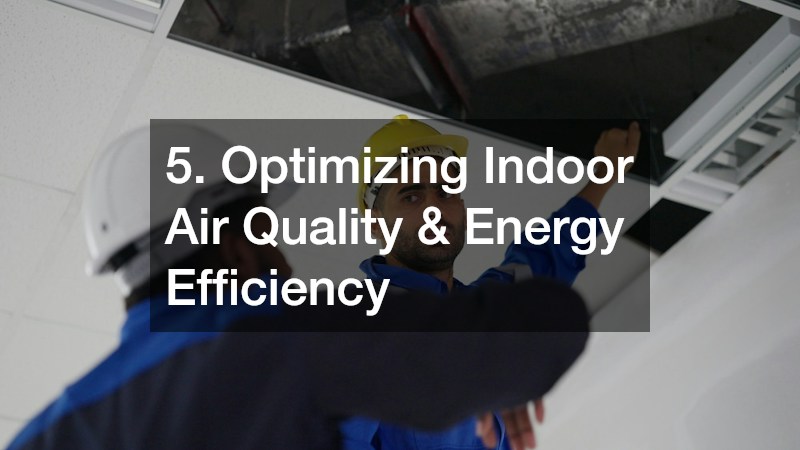
Over time, air distribution ductwork accumulates heavy layers of fine industrial dust, manufacturing particulates, skin cells, mold spores, and airborne allergens. This buildup restricts system airflow, forces supply fans to run longer to maintain set temperatures, and distributes air pollutants across workspaces. Hiring a professional commercial air duct cleaning service removes accumulated debris from supply trunks, return drops, internal coils, and diffusers. Deep cleaning your duct systems restores optimal airflow efficiency, lowers energy consumption, and improves workplace air quality.
6. Elevating Curb Appeal & Brand Identity Through Facility Cleanliness
The exterior appearance of your commercial facility acts as a physical billboard for your business. Clients, investors, prospective hires, and local community members evaluate your professional reliability based on first impressions. A dirty, neglected, or poorly maintained facility projects operational disorder, while a clean, bright building builds trust and pride in your brand.
Maintaining high visual standards requires a routine cleaning schedule for all customer-facing surfaces, exterior building walls, entry foyers, and parking facilities.
- Maintain Exterior Landscaping: Keep lawn areas manicured, weed planting beds regularly, and clear trash from parking lot perimeters daily.
- Clean Glass & Glazing: Wash ground-floor and upper-level windows quarterly to maximize natural interior lighting and preserve visual appeal.
- Address Ground Stains Promptly: Treat oil drips, chemical spills, and tire marks in customer parking spots and loading bays before stains set permanently into the pavement.
Extensive exterior surfaces—such as concrete walkways, brick facades, loading ramps, and parking structures—gather continuous layers of vehicle exhaust soot, ground-in dirt, moss, algae, and oil stains. Deploying a heavy-duty commercial pressure washer on a regular seasonal schedule strips away deep surface contamination, sanitizes high-traffic pedestrian entrances, and prevents slippery organic growth on damp outdoor walkways. Regular pressure washing preserves surface coatings and keeps property exteriors looking fresh and well-maintained.
Your primary exterior signage completes the visual presentation of your physical property. A faded, damaged, or unlit sign negatively impacts brand perception and makes your site difficult for clients and delivery drivers to locate. Inspecting your primary business sign guarantees that internal LED modules are working, acrylic faces are clean and undamaged, structural mounting posts remain secure, and electrical connections satisfy local safety codes. Keeping your signage clean and fully illuminated projects strength, reliability, and attention to detail.
Using This Guide for Your Small Business

Scaling a small business requires managing physical infrastructure with the same discipline applied to financial, operational, and marketing strategies. By shifting from reactive problem-solving to a structured, proactive maintenance plan, business owners protect capital investments, extend asset life cycles, avoid costly emergency downtime, and create safe, attractive environments for employees and customers alike.